
2023 黑客松获奖作品:基于OpenVINO与PaddleOCR的输出抄表器
本文介绍一种无需额外训练的自动化抄表方案,通过人工智能技术解决人工抄表费事、易出错的问题。该方案先配置图片屏幕区域坐标并预处理,再配置待识别元素坐标并裁剪,利用OpenVINO加载PaddleOCR模型识别文字,经结构化输出与后处理得到结果,无需大量贴合业务场景的数据集,适用于内容为文字的规整“表”。
背景介绍
“表”是生活中的随处可见的一种设备。常见的“表”包括了家用电表,水表等设备;除此之外,还有工频场强计等“表”。受制于由于受到区域因素以及技术因素的制约,并非每种“表”都能够进行数据的自动采集,从而只能通过人工手动抄表。这种数据采集工作一方面较为费事和枯燥,另一方面,长时间工作带来的会导致工作人员疲劳,从而产生抄录错误。通过人工智能技术构造自动化的抄表流程能够极大的克服上述问题,提高工作效率。
相关工作
迄今为止,已经有许多关于电表读数的优秀项目出现,这些项目大都依赖于对特定场景的模型训练(包括微调)。
例如:
【PaddlePaddle+OpenVINO】电表检测识别模型的部署OpenVINO meter reader但对于抄表工作的业务场景而言,具有以下特点:
无法准备大量的彻底贴合业务场景的数据集。待抄录的“表”中的内容是文字,而非进度条或仪表盘基于开放数据训练得到的OCR模型能够识别到“表”中的内容因而,对于一些较为规整的“表”,我们完全可以基于开源OCR模型进行零微调的抄表工作。
技术方案
本项目提供了有一种无需额外训练的抄表器,只需要人为指定一些和布局有关的配置信息,即可实现表中数据的记录。总体流程如下:
配置图片中屏幕区域的坐标值。(这些坐标值也可以通过cv2的拐点检测或深度学习进行获取)对图片进行预处理(仿射变换)配置待识别的元素对应的坐标,并裁剪对应的区域。如有需要,可以对裁剪下来的区域进行预处理。基于OpenVINO进行文字识别。结构化输出信息如有需要,对输出结果进行进一步精炼。
目录
背景介绍图片预处理基于OpenVINO加载PaddleOCR识别模型进行预测结构化输出与后处理图片预处理
由于本项目是一个零微调的项目,因此,为了保证识别模型的有效性,需要人工对齐输入信息。
修正倾斜的图片,将图片中的屏幕区域修正到指定的大小根据从说明书等地方获取到的设备信息,设定待识别的区域在屏幕上的布局。修正图片
以下列图片为例,本节展示如何将图片从倾斜的状态,修正为正面观众的状态。
 In [3]
# 配置坐标信息# The coordinates of the corners of the screen in case 1POINTS = [[1121, 56], # Left top [3242, 183], # right top [3040, 1841], # right bottom [1000, 1543]] # left bottom# The size of the screen in case 1DESIGN_SHAPE = (1300, 1000)登录后复制In [5]
import cv2 import numpy as np# 定义仿射变换函数def pre_processing(img, point_list, target_shape): """ Preprocessing function for normalizing skewed images. Parameters: img (np.ndarray): Input image. point_list (List[List[int, int], List[int, int], List[int, int]]): Coordinates of the corners of the screen. target_shape (Tuple(int, int)): The design shape. """ # affine transformations # point list is the coordinates of the corners of the screen # target shape is the design shape target_w, target_h = target_shape pts1 = np.float32(point_list) pts2 = np.float32([[0, 0],[target_w,0],[target_w, target_h],[0,target_h]]) M = cv2.getPerspectiveTransform(pts1, pts2) img2 = cv2.warpPerspective(img, M, (target_w,target_h)) return img2登录后复制In [6]
import matplotlib.pyplot as plt# 执行预处理img = cv2.imread('example1.webp')# affine transformations to normalize skewed imagesimg = pre_processing(img, POINTS, DESIGN_SHAPE)# The screen part is cropped and correctedplt.imshow(img)登录后复制登录后复制
登录后复制
基于OpenVINO加载PaddleOCR识别模型进行预测
文字识别模型(PaddleOCR)
PaddleOCR 是PaddlePaddle的文字识别套件。迄今为止,PaddleOCR已经提供了许多复用性强的预训练模型。在本项目中使用的预训练模型是Chinese and English ultra-lightweight PP-OCR model (9.4M)。更多的信息请参考PaddleOCR Github或PaddleOCR Gitee。
一个标准的OCR流程包括了文字检测和文字识别,对于本项目来说,文字检测工作已经通过人工配置的方式解决了,因此,只需要进行文字识别即可。
OpenVINO简介
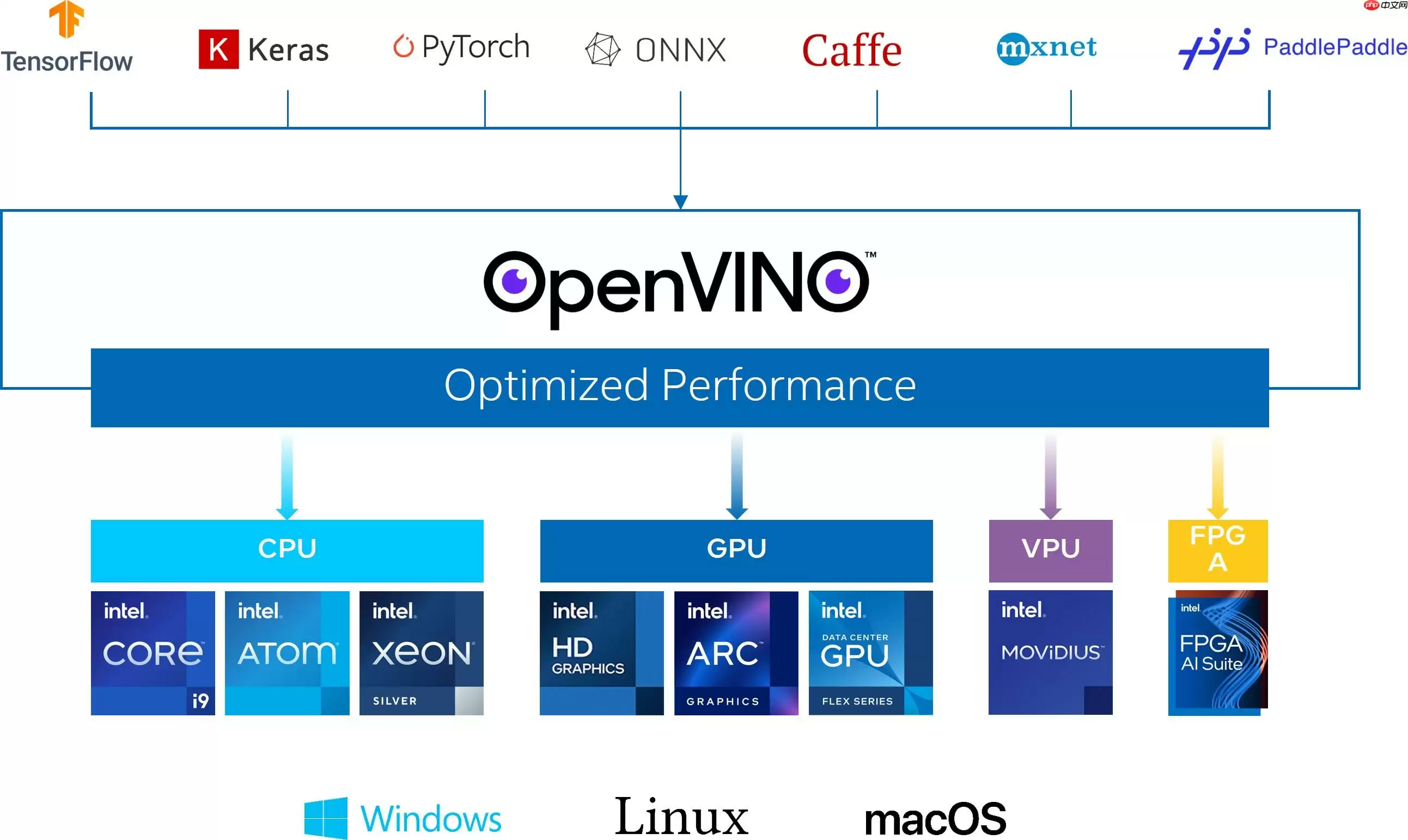
OpenVINO作为Intel原生的深度学习推理框架,可以最大化的提升人工智能神经网络在Intel平台上的执行性能,实现一次编写,任意部署的开发体验。OpenVINO在2024.1版本后,就可以直接支持飞桨模型,大大提升了模型在Intel异构硬件上的推理性能与部署便捷性,带来更高的生产效率,更广阔的兼容性以及推理性能的优化。
获取模型
In [ ]! wget "https://paddleocr.bj.bcebos.com/PP-OCRv3/chinese/ch_PP-OCRv3_rec_infer.tar"! tar -xvf ch_PP-OCRv3_rec_infer.tar登录后复制
基于OpenVINO加载PaddleOCR
使用OpenVINO加载Paddle模型无需经过任何转换,只需要
创建环境读取模型生成推理接口In [ ]! pip install openvino登录后复制In [11]
from openvino.runtime import Core# Initialize OpenVINO Runtime for text recognition.core = Core()# Read the model and corresponding weights from a file.rec_model_file_path = "ch_PP-OCRv3_rec_infer/inference.pdmodel"rec_model = core.read_model(model=rec_model_file_path)# Assign dynamic shapes to every input layer on the last dimension.for input_layer in rec_model.inputs: input_shape = input_layer.partial_shape input_shape[3] = -1 rec_model.reshape({input_layer: input_shape})rec_compiled_model = core.compile_model(model=rec_model, device_name="CPU")# Get input and output nodes.rec_input_layer = rec_compiled_model.input(0)rec_output_layer = rec_compiled_model.output(0)登录后复制文字识别
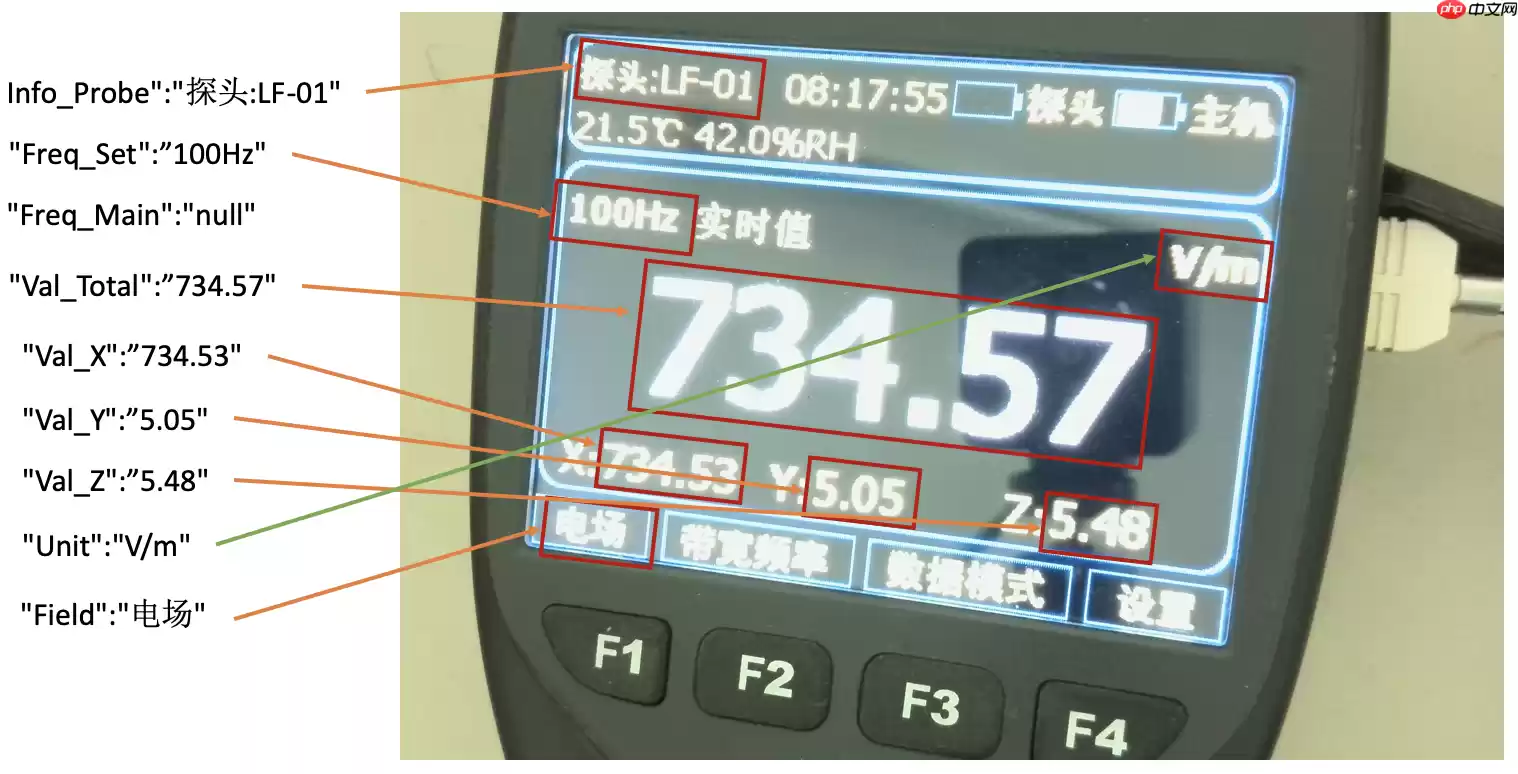
依旧对于上述示例图片,希望结构化输出以下内容:[{"Info_Probe":""}, {"Freq_Set":""}, {"Freq_Main":""}, {"Val_Total":""},{"Val_X":""}, {"Val_Y":""}, {"Val_Z":""}, {"Unit":""}, {"Field":""}]。输出示例如下图所示:
配置布局
首先,需要基于仿射变换的结果,配置各个元素在图片上的布局。这个配置对于同一批表来说是固定的。
In [13]# features and layout informationDESIGN_LAYOUT = {'Info_Probe':[14, 36, 410, 135], # feature_name, xmin, ymin, xmax, ymax 'Freq_Set':[5, 290, 544, 406], 'Val_Total':[52, 419, 1256, 741], 'Val_X':[19, 774, 433, 882], 'Val_Y':[433, 773, 874, 884], 'Val_Z':[873, 773, 1276, 883], 'Unit':[1064, 291, 1295, 403], 'Field':[5, 913, 243, 998]}登录后复制文字识别的预处理函数
In [18]import copyimport math# Preprocess for text recognition.def resize_norm_img(img, max_wh_ratio): """ Resize input image for text recognition Parameters: img: image with bounding box from text detection max_wh_ratio: ratio of image scaling """ rec_image_shape = [3, 48, 320] imgC, imgH, imgW = rec_image_shape assert imgC == img.shape[2] character_type = "ch" if character_type == "ch": imgW = int((32 * max_wh_ratio)) h, w = img.shape[:2] ratio = w / float(h) if math.ceil(imgH * ratio) > imgW: resized_w = imgW else: resized_w = int(math.ceil(imgH * ratio)) resized_image = cv2.resize(img, (resized_w, imgH)) resized_image = resized_image.astype('float32') resized_image = resized_image.transpose((2, 0, 1)) / 255 resized_image -= 0.5 resized_image /= 0.5 padding_im = np.zeros((imgC, imgH, imgW), dtype=np.float32) padding_im[:, :, 0:resized_w] = resized_image return padding_imdef get_rotate_crop_image(img, points): ''' img_height, img_width = img.shape[0:2] left = int(np.min(points[:, 0])) right = int(np.max(points[:, 0])) top = int(np.min(points[:, 1])) bottom = int(np.max(points[:, 1])) img_crop = img[top:bottom, left:right, :].copy() points[:, 0] = points[:, 0] - left points[:, 1] = points[:, 1] - top ''' assert len(points) == 4, "shape of points must be 4*2" img_crop_width = int( max( np.linalg.norm(points[0] - points[1]), np.linalg.norm(points[2] - points[3]))) img_crop_height = int( max( np.linalg.norm(points[0] - points[3]), np.linalg.norm(points[1] - points[2]))) pts_std = np.float32([[0, 0], [img_crop_width, 0], [img_crop_width, img_crop_height], [0, img_crop_height]]) M = cv2.getPerspectiveTransform(points, pts_std) dst_img = cv2.warpPerspective( img, M, (img_crop_width, img_crop_height), borderMode=cv2.BORDER_REPLICATE, flags=cv2.INTER_CUBIC) dst_img_height, dst_img_width = dst_img.shape[0:2] if dst_img_height * 1.0 / dst_img_width >= 1.5: dst_img = np.rot90(dst_img) return dst_imgdef prep_for_rec(dt_boxes, frame): """ Preprocessing of the detected bounding boxes for text recognition Parameters: dt_boxes: detected bounding boxes from text detection frame: original input frame """ ori_im = frame.copy() img_crop_list = [] for bno in range(len(dt_boxes)): tmp_box = copy.deepcopy(dt_boxes[bno]) img_crop = get_rotate_crop_image(ori_im, tmp_box) img_crop_list.append(img_crop) img_num = len(img_crop_list) # Calculate the aspect ratio of all text bars. width_list = [] for img in img_crop_list: width_list.append(img.shape[1] / float(img.shape[0])) # Sorting can speed up the recognition process. indices = np.argsort(np.array(width_list)) return img_crop_list, img_num, indicesdef batch_text_box(img_crop_list, img_num, indices, beg_img_no, batch_num): """ Batch for text recognition Parameters: img_crop_list: processed bounding box images with detected bounding box img_num: number of bounding boxes from text detection indices: sorting for bounding boxes to speed up text recognition beg_img_no: the beginning number of bounding boxes for each batch of text recognition inference batch_num: number of images in each batch """ norm_img_batch = [] max_wh_ratio = 0 end_img_no = min(img_num, beg_img_no + batch_num) for ino in range(beg_img_no, end_img_no): h, w = img_crop_list[indices[ino]].shape[0:2] wh_ratio = w * 1.0 / h max_wh_ratio = max(max_wh_ratio, wh_ratio) for ino in range(beg_img_no, end_img_no): norm_img = resize_norm_img(img_crop_list[indices[ino]], max_wh_ratio) norm_img = norm_img[np.newaxis, :] norm_img_batch.append(norm_img) norm_img_batch = np.concatenate(norm_img_batch) norm_img_batch = norm_img_batch.copy() return norm_img_batch登录后复制文字识别的后处理函数
用于将文字识别的结果进行解码,转化为汉字
In [21]class RecLabelDecode(object): """ Convert between text-label and text-index """ def __init__(self, character_dict_path=None, character_type='ch', use_space_char=False): support_character_type = [ 'ch', 'en', 'EN_symbol', 'french', 'german', 'japan', 'korean', 'it', 'xi', 'pu', 'ru', 'ar', 'ta', 'ug', 'fa', 'ur', 'rs', 'oc', 'rsc', 'bg', 'uk', 'be', 'te', 'ka', 'chinese_cht', 'hi', 'mr', 'ne', 'EN', 'latin', 'arabic', 'cyrillic', 'devanagari' ] assert character_type in support_character_type, "Only {} are supported now but get {}".format( support_character_type, character_type) self.beg_str = "sos" self.end_str = "eos" if character_type == "en": self.character_str = "0123456789abcdefghijklmnopqrstuvwxyz" dict_character = list(self.character_str) elif character_type == "EN_symbol": # same with ASTER setting (use 94 char). self.character_str = string.printable[:-6] dict_character = list(self.character_str) elif character_type in support_character_type: self.character_str = [] assert character_dict_path is not None, "character_dict_path should not be None when character_type is {}".format( character_type) with open(character_dict_path, "rb") as fin: lines = fin.readlines() for line in lines: line = line.decode('utf-8').strip("\n").strip("\r\n") self.character_str.append(line) if use_space_char: self.character_str.append(" ") dict_character = list(self.character_str) else: raise NotImplementedError self.character_type = character_type dict_character = self.add_special_char(dict_character) self.dict = {} for i, char in enumerate(dict_character): self.dict[char] = i self.character = dict_character def __call__(self, preds, label=None, *args, **kwargs): preds_idx = preds.argmax(axis=2) preds_prob = preds.max(axis=2) text = self.decode(preds_idx, preds_prob, is_remove_duplicate=True) if label is None: return text label = self.decode(label) return text, label def add_special_char(self, dict_character): dict_character = ['blank'] + dict_character return dict_character def decode(self, text_index, text_prob=None, is_remove_duplicate=False): """ convert text-index into text-label. """ result_list = [] ignored_tokens = self.get_ignored_tokens() batch_size = len(text_index) for batch_idx in range(batch_size): char_list = [] conf_list = [] for idx in range(len(text_index[batch_idx])): if text_index[batch_idx][idx] in ignored_tokens: continue if is_remove_duplicate: # only for predict if idx > 0 and text_index[batch_idx][idx - 1] == text_index[ batch_idx][idx]: continue char_list.append(self.character[int(text_index[batch_idx][ idx])]) if text_prob is not None: conf_list.append(text_prob[batch_idx][idx]) else: conf_list.append(1) text = ''.join(char_list) result_list.append((text, np.mean(conf_list))) return result_list def get_ignored_tokens(self): return [0] # for ctc blank# Since the recognition results contain chinese words, we should use 'ch' as character_typetext_decoder = RecLabelDecode(character_dict_path="ppocr_keys_v1.txt", character_type='ch', use_space_char=True)登录后复制基于OpenVINO进行文字识别
下面以Freq_Set为例,进行文字识别
In [25]# 输出结构体struct_result = {} # Crop imgs according the layout informationxmin, ymin, xmax, ymax = DESIGN_LAYOUT['Freq_Set']crop_img = img[ymin:ymax, xmin:xmax]h = ymax - ymin # height of crop_imgw = xmax - xmin # width of crop_imgdt_boxes = [np.array([[0,0],[w,0],[w,h],[0,h]],dtype='float32')]batch_num = 1# since the input img is cropped, we do not need a detection model to find the position of texts# Preprocess detection results for recognition.img_crop_list, img_num, indices = prep_for_rec(dt_boxes, crop_img)# txts are the recognized text resultsrec_res = [['', 0.0]] * img_numtxts = [] for beg_img_no in range(0, img_num): # Recognition starts from here. norm_img_batch = batch_text_box( img_crop_list, img_num, indices, beg_img_no, batch_num) # Run inference for text recognition. rec_results = rec_compiled_model([norm_img_batch])[rec_output_layer] # Postprocessing recognition results. rec_result = text_decoder(rec_results) for rno in range(len(rec_result)): rec_res[indices[beg_img_no + rno]] = rec_result[rno] if rec_res: txts = [rec_res[i][0] for i in range(len(rec_res))] # record the recognition resultstruct_result['Freq_Set'] = txts[0]print(txts[0])登录后复制100H2实时值登录后复制
结构化输出与后处理
上面的逻辑已经完成了使用OpenVINO加载PaddleOCR并进行预测,但实际上由于整个模型没有进行微调,所以对于当前的业务场景来说可能不够完美,这个时候可以通过一些简单的逻辑进行处理,比如,对于示例图片中,H2必然是不存在的,这个地方可以直接通过replace替换为HZ。
简单来说,对于示例图片的这种表,可以定义如下后处理函数:
In [28]# Post-processing, fix some error made in recognitiondef post_processing(results, post_configration): """ Postprocessing function for correcting the recognition errors. Parameters: results (Dict): The result directory. post_configration (Dict): The configuration directory. """ for key in results.keys(): if len(post_configration[key]) == 0: continue # nothing to do for post_item in post_configration[key]: key_word = post_item[0] if key_word == 'MP': # mapping source_word = post_item[1] target_word = post_item[2] if source_word in results[key]: results[key] = target_word elif key_word == 'RP': # removing source_word = post_item[1] target_word = post_item[2] results[key] = results[key].replace(source_word, target_word) elif key_word == 'AD': # add point add_position = post_item[1] results[key] = results[key][:add_position] + '.' + results[key][add_position:] return results# 通过配置决定如何进行后处理# Congiguration for postprocessing of the resultsRESULT_POST = {"Info_Probe":[['MP', 'LF', '探头:LF-01']], # words need to be mapped "Freq_Set":[['RP', '实时值', ''], ['RP', ' ', ''], ['RP', 'H2', 'HZ']], # words need to be replace "Val_Total":[['RP', 'H2', 'Hz']], "Val_X":[['RP', 'X', ''], ['RP', ':', '']], "Val_Y":[['RP', 'Y', ''], ['RP', ':', '']], "Val_Z":[['RP', 'Z', ''], ['RP', ':', '']], "Unit":[['MP', 'T', 'μT'],['MP', 'kV', 'kV/m'],['MP', 'kv', 'kV/m'],['MP', 'vm', 'V/m'],['MP', 'Vm', 'V/m'],['MP', 'A', 'A/m']], "Field":[]} # nothing need to do# Postprocessing, to fix some error made in recognitionstruct_result = post_processing(struct_result, RESULT_POST)# Print resultprint(struct_result)登录后复制{'Freq_Set': '100HZ'}登录后复制全流程一键运行
为了方便运行,这里也提供了一个封装好的函数
In [32]# 为了避免因为图片模糊导致的漏检,配置一个输出模板,从而让每个图片输出格式都一致# Output template in case 1RESULT_TEMP = {"Info_Probe":"探头:---", "Freq_Set":"", "Val_Total":"无探头", "Val_X":"", "Val_Y":"", "Val_Z":"", "Unit":"A/m", "Field":"常规"}登录后复制In [33]# the input of recognition should be image, DESIGN information, compiled_modeldef main_function(img, DESIGN_LAYOUT, RESULT_TEMP, preprocess_function=None): """ Main program of processing the meter. Parameters: img (np.ndarray): Input image. DESIGN_LAYOUT (Dict): The coordinates of elements in the screen. RESULT_TEMP (Dict): The template for structure output. preprocess_function: The preprocess function for cropped images, `None` means no preprocessing to do. """ # copy the structure output template struct_result = copy.deepcopy(RESULT_TEMP) # structure recognition begins here for key in DESIGN_LAYOUT.keys(): # Crop imgs according the layout information xmin, ymin, xmax, ymax = DESIGN_LAYOUT[key] crop_img = img[ymin:ymax, xmin:xmax] # preprocessing for cropped images if preprocess_function is not None: crop_img = preprocess_function(crop_img) h = ymax - ymin # height of crop_img w = xmax - xmin # width of crop_img dt_boxes = [np.array([[0,0],[w,0],[w,h],[0,h]],dtype='float32')] batch_num = 1 # since the input img is cropped, we do not need a detection model to find the position of texts # Preprocess detection results for recognition. img_crop_list, img_num, indices = prep_for_rec(dt_boxes, crop_img) # txts are the recognized text results rec_res = [['', 0.0]] * img_num txts = [] for beg_img_no in range(0, img_num): # Recognition starts from here. norm_img_batch = batch_text_box( img_crop_list, img_num, indices, beg_img_no, batch_num) # Run inference for text recognition. rec_results = rec_compiled_model([norm_img_batch])[rec_output_layer] # Postprocessing recognition results. rec_result = text_decoder(rec_results) for rno in range(len(rec_result)): rec_res[indices[beg_img_no + rno]] = rec_result[rno] if rec_res: txts = [rec_res[i][0] for i in range(len(rec_res))] # record the recognition result struct_result[key] = txts[0] return struct_result登录后复制In [34]
img = cv2.imread('example1.webp')# affine transformations to normalize skewed imagesimg = pre_processing(img, POINTS, DESIGN_SHAPE)struct_result = main_function(img, DESIGN_LAYOUT, RESULT_TEMP)# Postprocessing, to fix some error made in recognitionstruct_result = post_processing(struct_result, RESULT_POST)# Print resultprint(struct_result)登录后复制{'Info_Probe': '探头:LF-01', 'Freq_Set': '100HZ', 'Val_Total': '734.57', 'Val_X': '734.53', 'Val_Y': '5.05', 'Val_Z': '5.48', 'Unit': 'V/m', 'Field': '电场'}登录后复制 相关攻略

直接说结论:使用 post-receive 钩子配合 GIT_WORK_TREE 环境变量,是实现 Git 自动部署最稳定可靠的方案。至于 post-update 钩子或在裸仓库中直接执行 checkout 的方法,强烈建议避免使用——它们不仅容易失败,而且错误信息往往不明确,排查过程极其耗时。 为

柴犬币(SHIB)两年内有望达到0 0001美元?深度解析其路径与挑战 柴犬币(SHIB)两年内有望达到0 0001美元,多家机构预测其2026至2028年可能实现破零,核心动力来自通缩销毁机制、Shibarium网络推动及生态扩展,但面临高流通量、市场竞争和实用性验证等挑战,需结合市场环境与长期发

如果你曾尝试使用Perplexity这类AI工具来学习Git分支管理,但总觉得得到的回答过于笼统、缺乏可操作的细节——例如,它可能只告诉你“使用merge合并分支”,但具体的操作步骤、遇到冲突时的处理方法却语焉不详——那么问题很可能出在你的提问方式上。AI并非真人导师,它需要更精确的指令才能输出有价

配置Git提交模板,本意是让每次提交信息都清晰、规范,但实际操作中,几个隐蔽的“坑”常常让这个功能形同虚设。今天,我们就来把这些坑一个个填平。 路径写错就静默失效,这是第一个大坑 配置项 commit template 对路径的敏感度超乎想象。写错一点,它不会报错,只会默默地“罢工”。结果就是你兴冲

配置 git commit template 来统一团队提交信息的格式,是建立 Git 工作流规范的第一步。然而,如果你认为仅靠一个模板文件就能一劳永逸,那可能陷入了一个常见的误区。实际上,这个配置的作用非常基础:它仅在你不使用 -m 参数、通过编辑器进行交互式提交时,将模板内容预填到提交信息编辑器
热门专题


热门推荐

现货持有者坚守仓位,比特币接近115,000水平 近期比特币(BTC)价格接近$115,000水平,市场整体情绪谨慎,但现货持有者依旧坚守仓位,显示出一定的多头信心。 市场现状与资金流动 那么,当前市场的资金究竟在如何流动?分析显示,一个有趣的现象正在上演:短线资金的流入其实相当有限,市场热度并未急

目录 要点介绍:分析师称XRP呈现“最强看涨结构”高位清算集中于2 90美元以上区域 周四,XRP价格稳稳站在了2 80美元上方。这个位置守住了,意味着什么?意味着市场向那个经典的“杯柄形态”目标价——6美元以上——又迈进了一步。 要点介绍: 先看几个核心数据:周四XRP报收2 82美元。技术分析显

近期,以太坊(ETH)衍生品市场经历了短暂的闪崩,但随后价格快速企稳,交易者开始关注关键突破点——$4,500水平。 ETH衍生品市场现状 市场情绪往往在剧烈波动后显露真容。从最新的链上数据和期权、永续合约的交易情况来看,那场短暂的闪崩更像是一次压力测试——结果是,市场波动率显著下降,多空力量似乎进

DOGE单日暴涨11%,交易量激增四倍,市场风向变了? 最近,加密货币市场又热闹起来了。DOGE(狗狗币)上演了一出“旱地拔葱”,价格单日暴涨11%,更关键的是,成交量直接翻了四倍。这种“价量齐升”的场面,无疑给整个迷因币板块打了一针强心剂,市场情绪肉眼可见地回暖了。 DOGE价格拉升原因分析 那么

如何安全获取欧易(OKX)官方APP?一份详尽的下载与使用指南 Binance币安 欧易OKX ️ Huobi火币️ 当人们谈论“欧易易欧”时,指的往往是那个全球顶尖的数字资产交易平台——欧易(OKX)。作为业务版图庞大的行业巨头,其官方APP无疑是用户进行交易、查看行情和管理资产的核心工具。不过,