
AutoML 自动机器学习完全指南:从概念到主流工具
AutoML(自动机器学习)旨在将机器学习的端到端流程自动化,让非专家也能高效构建模型,同时帮助数据科学家从繁琐的重复劳动中解放出来。本文将从基础概念、核心分类、实际价值入手,系统梳理主流 AutoML 库(涵盖 Python、R、Scala、Ja va 等语言),并提供代码示例与实用技巧。
一、什么是 AutoML?
机器学习模型通常需要经历以下步骤:
- 数据读取与合并:将原始数据整合为可用格式。
- 数据预处理:包括数据清洗与整理。
- 特征优化与模型选择:筛选最佳特征并确定算法。
- 应用与预测:将模型部署到实际场景中。
传统上这些步骤依赖人工完成,而 AutoML 的出现使它们可以自动化执行,大幅降低机器学习门槛。
二、AutoML 的三类应用
当前 AutoML 主要分为以下三类:
- 用于自动参数调整的 AutoML(相对基础的类型)
- 用于非深度学习的 AutoML(如 AutoSKlearn),主要应用于数据预处理、自动特征分析、自动特征检测、自动特征选择和自动模型选择。
- 用于深度学习/神经网络的 AutoML,包括 NAS(神经架构搜索)、ENAS 以及框架如 Auto-Keras。
三、为什么需要 AutoML?
机器学习的商业需求激增,但企业面临两大痛点:一是需要高薪聘请经验丰富的数据科学家团队;二是即使拥有专家,也往往需要更多业务经验而非 AI 知识来决策最佳模型。AutoML 的目标是自动执行 ML 流水线中的尽可能多的步骤,以最少的人力维持良好的模型性能,让非专家也能轻松使用。
四、AutoML 三大优点
- 提高效率:自动化最重复的任务(如超参数调优),使数据科学家专注业务问题而非模型细节。
- 避免错误:自动化流水线可减少手工作业引发的潜在错误。
- 民主化:让人人都能享用机器学习能力,不再局限于少数专家。
五、主流 AutoML 库详解(按语言分类)
5.1 Python 实现
auto-sklearn
auto-sklearn 是 scikit-learn 估计器的直接替代品,自动处理算法选择和超参数调整。它包含特征设计方法(如 One-Hot 编码、数值标准化、PCA),使用贝叶斯搜索优化管道,并引入元学习与自动集成构造。
小提示:auto-sklearn 在中小型数据集上表现出色,但难以在大型数据集上生成现代深度学习系统。
示例代码:
import sklearn.model_selection
import sklearn.datasets
import sklearn.metrics
import autosklearn.regression

def main():
    X, y = sklearn.datasets.load_boston(return_X_y=True)
    feature_types = (['numerical'] * 3) + ['categorical'] + (['numerical'] * 9)
    X_train, X_test, y_train, y_test =
    sklearn.model_selection.train_test_split(X, y, random_state=1)
    automl = autosklearn.regression.AutoSklearnRegressor(
    time_left_for_this_task=120,
    per_run_time_limit=30,
    tmp_folder='/tmp/autosklearn_regression_example_tmp',
    output_folder='/tmp/autosklearn_regression_example_out',
    )
    automl.fit(X_train, y_train, dataset_name='boston',
    feat_type=feature_types)
    print(automl.show_models())
    predictions = automl.predict(X_test)
    print("R2 score:", sklearn.metrics.r2_score(y_test, predictions))

if __name__ == '__main__':
main()
FeatureTools
用于自动特征工程的 Python 库。
安装方法:
- 通过 pip:
python -m pip install featuretools - 通过 conda:
conda install -c conda-forge featuretools
附加组件:可单独安装或全部安装:python -m pip install featuretools[complete]。例如:
python -m pip install featuretools[update_checker](更新检查器)python -m pip install featuretools[tsfresh](使用 tsfresh 中的 60+ 个基元)
示例:
import featuretools as ft
es = ft.demo.load_mock_customer(return_entityset=True)
es.plot()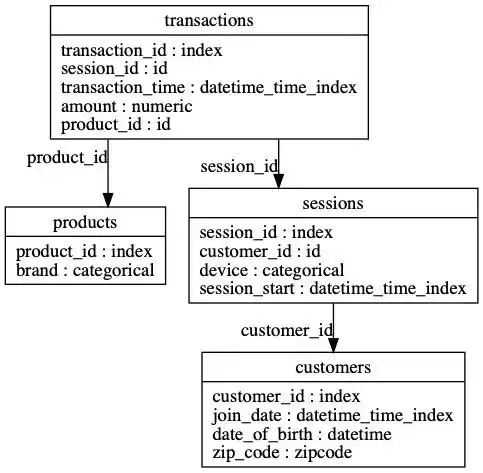
Featuretools 可为任意「目标实体」自动创建特征表:
feature_matrix, features_defs = ft.dfs(entityset=es,
                     target_entity="customers")
feature_matrix.head(5)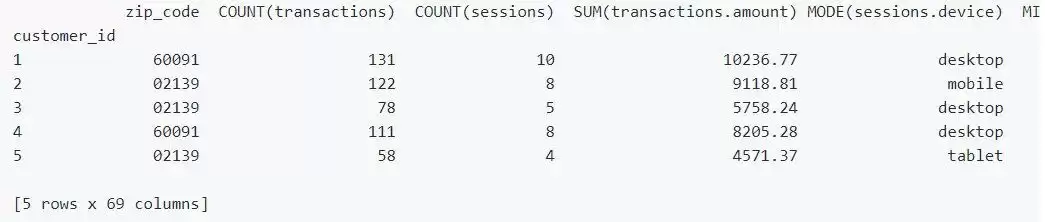
MLBox
功能强大的自动化机器学习库,具有以下特点:
- 快速读取和分布式数据预处理/清理/格式化
- 高度强大的特征选择、泄漏检测及精确超参数优化
- 最新的分类和回归模型(深度学习、Stacking、LightGBM 等)
- 模型解释与预测
MLBox 已在 Kaggle 上验证性能。其架构包含三个子包:预处理(读取和预处理数据)、优化(测试或优化各种学习器)、预测(预测测试集目标)。
TPOT
TPOT(基于树的管道优化工具)使用遗传算法优化机器学习管道,基于 scikit-learn 构建。它探索数千种可能的管道,找到最适合数据的方案。
注意:TPOT 仍在积极开发中。详细原理可参考文末链接。
分类示例(手写数字数据集):
from tpot import TPOTClassifier
from sklearn.datasets import load_digits
from sklearn.model_selection import train_test_split
digits = load_digits()
X_train, X_test, y_train, y_test = train_test_split(digits.data,
                                                    digits.target,
                                                    train_size=0.75,
                                                    test_size=0.25,
                                                    random_state=42)
tpot = TPOTClassifier(generations=5, population_size=50,
                      verbosity=2, random_state=42)
tpot.fit(X_train, y_train)
print(tpot.score(X_test, y_test))
tpot.export('tpot_digits_pipeline.py')
此代码将发现准确率约 98% 的管道,并导出为 Python 文件,内容类似:
import numpy as np
import pandas as pd
from sklearn.ensemble import RandomForestClassifier
from sklearn.linear_model import LogisticRegression
from sklearn.model_selection import train_test_split
from sklearn.pipeline import make_pipeline, make_union
from sklearn.preprocessing import PolynomialFeatures
from tpot.builtins import StackingEstimator
from tpot.export_utils import set_param_recursive

tpot_data = pd.read_csv('PATH/TO/DATA/FILE', sep='COLUMN_SEPARATOR', dtype=np.float64)
features = tpot_data.drop('target', axis=1)
training_features, testing_features, training_target, testing_target =
   train_test_split(features, tpot_data['target'], random_state=42)

exported_pipeline = make_pipeline(
   PolynomialFeatures(degree=2, include_bias=False, interaction_only=False),
   StackingEstimator(estimator=LogisticRegression(C=0.1, dual=False, penalty="l1")),
   RandomForestClassifier(bootstrap=True, criterion='entropy',
                           max_features=0.35000000000000003,
                           min_samples_leaf=20, min_samples_split=19,
                           n_estimators=100)
)
set_param_recursive(exported_pipeline.steps, 'random_state', 42)
exported_pipeline.fit(training_features, training_target)
results = exported_pipeline.predict(testing_features)
回归示例(波士顿房价数据集):
from tpot import TPOTRegressor
from sklearn.datasets import load_boston
from sklearn.model_selection import train_test_split
housing = load_boston()
X_train, X_test, y_train, y_test = train_test_split(
     housing.data,
    housing.target,
     train_size=0.75,
     test_size=0.25,
     random_state=42)
tpot = TPOTRegressor(generations=5, population_size=50,
                     verbosity=2, random_state=42)
tpot.fit(X_train, y_train)
print(tpot.score(X_test, y_test))
tpot.export('tpot_boston_pipeline.py')
导出的管道代码(MSE 约 12.77):
import numpy as np
import pandas as pd
from sklearn.ensemble import ExtraTreesRegressor
from sklearn.model_selection import train_test_split
from sklearn.pipeline import make_pipeline
from sklearn.preprocessing import PolynomialFeatures
from tpot.export_utils import set_param_recursive

tpot_data = pd.read_csv('PATH/TO/DATA/FILE',
                        sep='COLUMN_SEPARATOR',
                        dtype=np.float64)
features = tpot_data.drop('target', axis=1)
training_features, testing_features, training_target, testing_target =
     train_test_split(features, tpot_data['target'], random_state=42)

exported_pipeline = make_pipeline(
    PolynomialFeatures(degree=2, include_bias=False, interaction_only=False),
    ExtraTreesRegressor(bootstrap=False, max_features=0.5,
                          min_samples_leaf=2, min_samples_split=3,
                          n_estimators=100)
)
set_param_recursive(exported_pipeline.steps, 'random_state', 42)
exported_pipeline.fit(training_features, training_target)
results = exported_pipeline.predict(testing_features)
Lightwood
基于 Pytorch 的框架,将机器学习问题分解为小块,一行代码即可构建预测模型。
安装:pip3 install lightwood(部分环境需用 pip)。
示例:预测 sensor3 的值:
from lightwood import Predictor
import pandas as pd
sensor3_predictor = Predictor(output=['sensor3']
                              ).learn(from_data=pd.read_csv('sensor_data.csv'))
prediction = sensor3_predictor.predict(when={'sensor1':1, 'sensor2':-1})
MindsDB
现有数据库的开源 AI 层,允许用 SQL 查询开发、训练和部署机器学习模型。
mljar-supervised
适用于表格数据的自动化 ML 包。它能帮助您:
- 解释和理解数据
- 尝试多种机器学习模型
- 生成详细的 Markdown 报告
- 保存、重运行和加载分析结果
内置三种工作模式:解释模式(侧重数据理解)、生产模式(构建 ML 管道)、竞赛模式(集成与堆叠)。
Auto-Keras
基于 Keras 的开源 AutoML 库,使用神经架构搜索(NAS)自动搜索模型架构和超参数,遵循 Scikit-Learn API,易于使用。
神经网络智能 NNI
用于神经架构搜索和超参数调整的开源工具包,提供命令行工具和 WebUI。支持自定义 AutoML 算法,内置多种先进算法,并开箱即用支持流行训练平台。
Ludwig
无需编写代码即可训练深度学习模型的工具箱,基于 TensorFlow。特点:
- 零编码
- 通用性:基于数据类型的设计适用于多种用例
- 灵活性:经验丰富的用户可精细控制
- 可扩展性:易于添加新架构和新数据类型
- 可理解性:提供标准可视化
- 开源(Apache License 2.0)
AdaNet
基于 TensorFlow 的轻量级框架,自动学习高质量模型,同时支持神经网络架构学习和集成学习。特点:
- 易于使用(Keras、Estimator API)
- 速度快
- 灵活性高(可扩展子网、搜索空间)
- 理论学习保证
Darts
基于架构空间的连续松弛和梯度下降,可高效设计卷积架构(CIFAR-10、ImageNet)和循环架构(Penn Treebank、WikiText-2),仅需一个 GPU。
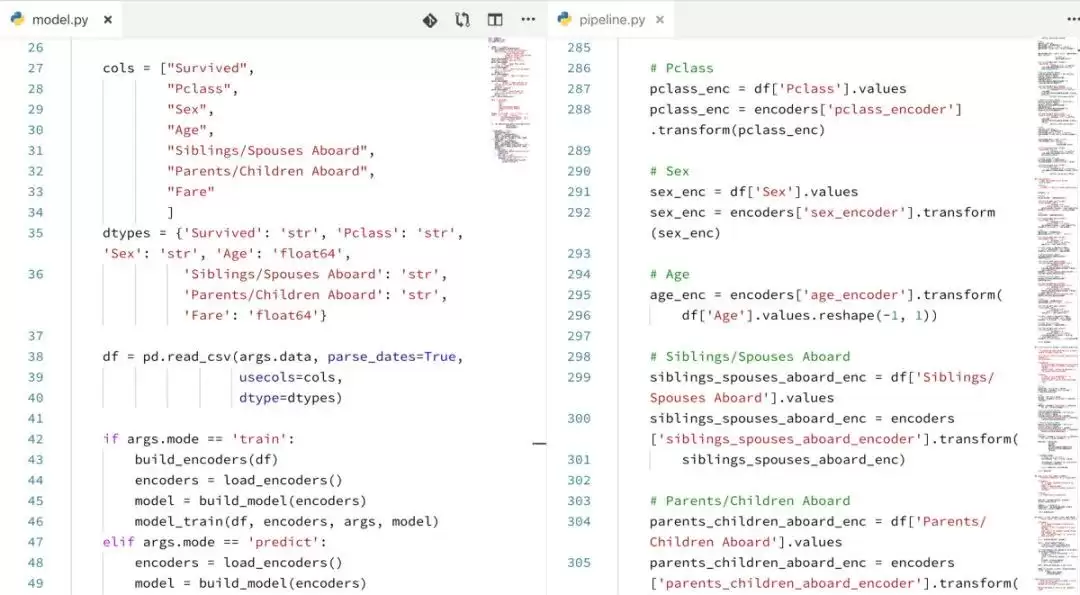
automl-gs
提供零代码/模型定义界面,只需输入 CSV 文件和目标字段,即可获得训练好的高性能模型以及原生 Python 代码管道。无黑箱,可查看数据与模型细节。
5.2 R 实现
AutoKeras 的 R 接口
AutoKeras 的 R 接口提供自动搜索深度学习模型架构和超参数的功能,适合 R 用户。
5.3 Scala 实现
TransmogrifAI
用 Scala 编写的 AutoML 库,运行于 Apache Spark 之上。特点:
- 大幅提升机器学习开发人员生产率
- 编译时类型安全、模块化、可重用
- 接近手动调优的精度,耗时缩短近 100 倍
适合:数小时而非数月构建生产级 ML 应用、无需博士学位即可建模、构建模块化强类型工作流。
5.4 Ja va 实现
Glaucus
基于数据流的机器学习套件,自动完成 ML 管道,简化复杂算法过程。用户只需上传数据、简单配置、选择算法,即可训练模型。平台提供丰富评估指标,支持多源数据集(结构化、文档、图像)。
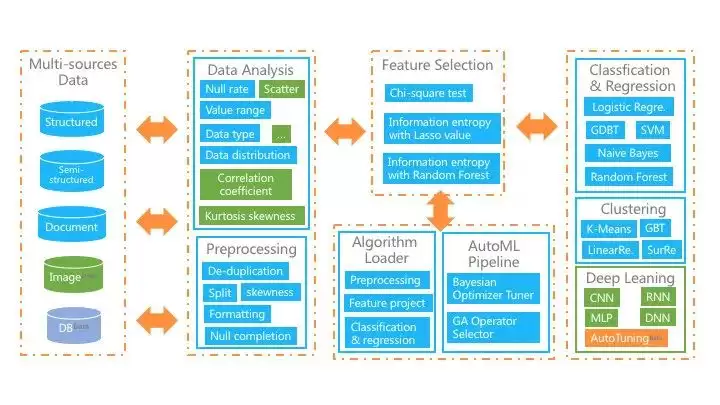
- 自动模式:从预处理到机器学习算法全管道自动化
- 手动模式:简化流程,提供自动数据清理、半自动特征选择和深度学习套件
5.5 其他工具
H2O AutoML
界面简洁,只需指定数据集、响应列,可选时间或模型数量限制。在 R 和 Python API 中使用 x、y、training_frame、validation_frame 等参数,配置 max_runtime_secs 或 max_models 即可。
PocketFlow
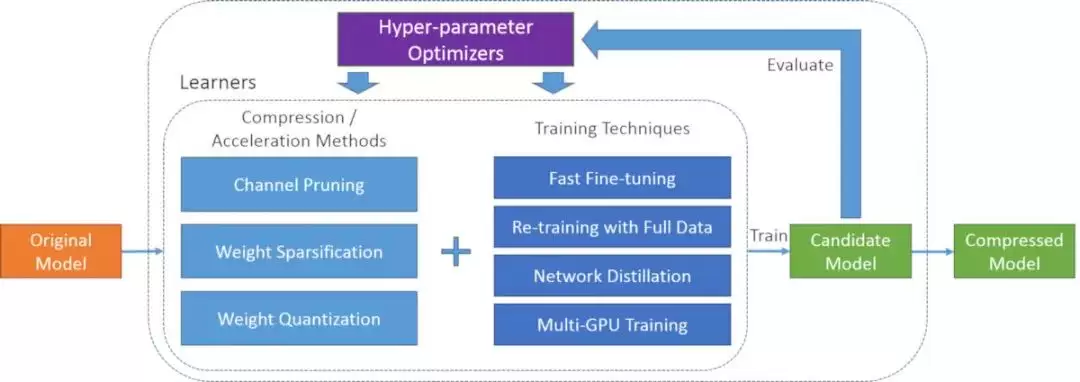
深度学习模型压缩与加速框架,以最少人力提高推理效率,适用于移动设备等资源受限场景。开发人员只需指定压缩/加速比,PocketFlow 自动选择超参数生成高效压缩模型。
Ray
提供构建分布式应用的通用 API,并集成以下库加快 ML 工作:
- Tune:可伸缩超参数调整
- RLlib:可伸缩强化学习
- RaySGD:分布式训练包装器
- Ray Serve:可伸缩可编程服务
SMAC3
算法配置工具,跨一组实例优化任意算法的参数(包括 ML 超参数)。核心包含贝叶斯优化和积极竞速机制,用 Python3 编写,随机森林用 C++。
六、常见问题(FAQ)
- 问:AutoML 能完全取代数据科学家吗?
答:不能。AutoML 负责自动化重复性任务(如参数调优、管道搜索),但业务理解、数据质量把控、模型可解释性、领域知识仍需数据科学家主导。AutoML 是强大助手,而非替代者。 - 问:哪种 AutoML 库最适合我的项目?
答:取决于数据规模、任务类型和编程语言。小规模表格数据推荐 auto-sklearn 或 TPOT;深度学习推荐 Auto-Keras 或 Darts;追求零代码可选 automl-gs 或 Ludwig;分布式场景可选 TransmogrifAI(Spark)或 H2O AutoML。 - 问:AutoML 调优后的模型是否一定比手动调优好?
答:不一定。AutoML 通常能快速找到较优解,但资深数据科学家通过领域知识和细致调优仍可能取得更佳效果。AutoML 的价值在于减少人工试错成本,尤其在时间紧迫或缺乏专家时。 - 问:使用 AutoML 是否需要强大的硬件?
答:部分库(如 auto-sklearn、TPOT)在普通 CPU 即可运行;深度学习相关库(如 Darts、Auto-Keras)建议使用 GPU。大部分库支持分布式扩展(如 Ray、NNI)。
七、总结
AutoML 正在改变机器学习的开发方式——它不仅能自动化管道创建和超参数调整,节省数据科学家的时间,还让非专业人士也能利用机器学习技术。无论您是初学者还是经验丰富的从业者,选择一个合适的 AutoML 库都能显著提升效率。未来的 AutoML 将更注重可解释性、分布式扩展和与业务场景的深度融合,让我们拭目以待。
编辑:黄飞