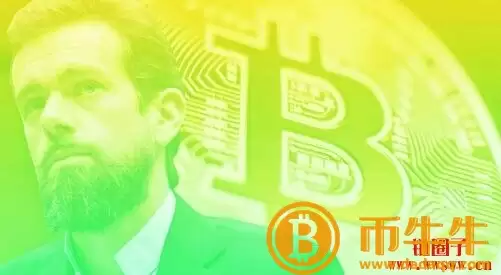
Jack Dorsey, the co-founder and former CEO of Twitter, is a public figure known for his support of cryptocurrencies. He has tweeted statements like "Bitcoin will unite a deeply divided country and ultimately unite the world." However, he is less enthusiastic about the broader Web 3 movement, which proposes a decentralized, user-owned alternative to the current state of Web 2 internet.
2026虚拟币交易平台推荐:
- 欧易(OKX)交易平台(>>>进入官网<<<)(下载OKX的Android安装包)
- 币安(Binance)交易平台(>>>进入官网<<<)(下载币安Android安装包)
At first glance, it might seem odd, but upon closer inspection, it becomes clear that Jack Dorsey's skepticism isn't directed at the theory of Web 3, but rather at how it's currently being implemented.
Two Camps in the Crypto World
Dorsey's lack of support for Web 3 is part of an ongoing ideological battle within the crypto space.
On one side, the "cryptographers" advocate for anything built on decentralized systems. This group expanded with the launch of Ethereum in 2014 and now includes all the Ethereum-killer communities that have branched out from the original smart contract projects, such as Solana, Luna, Avalanche, and Fantom. These individuals make up a significant portion of Crypto Twitter and have driven the DeFi boom of 2020, the NFT craze of 2021, and this year's GameFi and DAO projects.
Smart contracts are the engines of these applications and platforms, replacing centralized gatekeepers with automatically executing code to conduct transparent and irreversible transactions. These systems require functional tokens to operate, which is why there are currently over 14,000 tokens trading in the cryptocurrency market. Web 3 isn't a single application but a broader ecosystem designed to encompass the entire digital world we live in today. In the Web 3 internet world, applications will be decentralized, connected to blockchains, and composed of user-owned assets like art, entertainment, games, social media, and other NFTs.
On the other side are the Bitcoin maximalists, or "Maxis," who believe that Bitcoin, the original cryptocurrency, is the only true and legitimate decentralized currency, blockchain, and infrastructure. This camp argues that most altcoins have compromised too much on decentralization in favor of speed and convenience. Concepts like the metaverse and the internet still need precise definitions, but Maxis already know what Bitcoin can offer:
- Data security, as the Bitcoin network cannot be hacked.
- Resistance, as anyone can use Bitcoin, and no one can stop you.
- Privacy, though not necessarily secrecy.
- Trustlessness, as everything runs on code in a fully decentralized system.
As proof of its decentralization, miners took years to reach a consensus on upgrades like Taproot and even longer to implement them. Despite some countries banning Bitcoin mining or trading, no country can stop the global Bitcoin network. In the eyes of Maxis, Bitcoin is the only "real" blockchain because there's no centralized group that can be targeted or unilaterally change it, unlike the USDC stablecoin managed by Circle.
What Does This Have to Do with Web 3?
So, in the crypto world, there are two camps. One camp uses new technology to experiment with democratizing any and all applications, while the other camp argues that these new systems aren't decentralized enough to reap the actual benefits of a true blockchain—they only enrich the creators and financial backers of the aforementioned projects.
Those firmly in the crypto camp point out that most projects currently being built and envisioned in the Web 3 space simply can't be accomplished using the Bitcoin blockchain. Bitcoin's bulletproof security and decentralization come at the cost of storage space and transaction speed. If it takes over 10 minutes for the Bitcoin blockchain to confirm that you now own a Snoopy-themed hot tub in The Sandbox, not many players will line up to join this glacial metaverse game.
Of course, Jack Dorsey understands this. If the current infrastructure isn't decentralized enough, and if Bitcoin is the only true blockchain but too slow, then there's currently no viable alternative to realize the vision of Web 3. So, perhaps this means that Jack Dorsey doesn't see the point of an immature decentralized Web 3 world. It would need to be significantly scaled down to run on the Bitcoin blockchain, which would require a complete overhaul.
But maybe trading NFT profile pictures doesn't necessarily need the world's most decentralized and robust crypto network to back it up—although some might argue that the Lightning Network or other layer-two solutions on top of Bitcoin could be suitable.
Perhaps a slightly less decentralized system that allows everyday users to access parts of finance and own their assets and data is still better than the Web 2 we have today. Even if it makes early investors like venture capitalists rich in the process, it's still a step forward to introduce more people to the true, raw, first, and "no country can stop me now" value of the Bitcoin blockchain.